
There is a dire need to protect the hills that serve as a green wall against desertification
Several years ago, I visited Bilaspur district in Himachal Pradesh for reporting on limestone quarrying at a site overlooking the Gobind Sagar reservoir in the fragile Himalayas. A cement company was steadily pealing, layer by layer, a limestone-bearing hill. When I asked the company’s general manager whether he realised that severe ecological damage would be caused by levelling the hill, his answer reflected the dominant mindset: “What ecological damage are you talking about when the hill will no longer be there?”
This does not, however, mean that all development activities based on the exploitation of natural resources must stop. It only means that excessive mining for major nutrients, for instance, comes with severe environmental consequences, and there is a need for tougher regulations as well as an economic evaluation of ecosystem services. It has social implications for which no measurement formula exists. In such a scenario, even if the policymakers have to err, they need to err on the side of the people and the environment.
Similarly, when Himalayan glaciers began to melt, there was an effort to build a narrative challenging what were then referred to as highly misguided claims. Thank heavens the world is now awake to the catastrophic consequences of melting glaciers. Going beyond global warming, the world has already entered the global boiling stage. It implies reckless exploitation of hills and forests, which will only push the world towards a climate catastrophe.
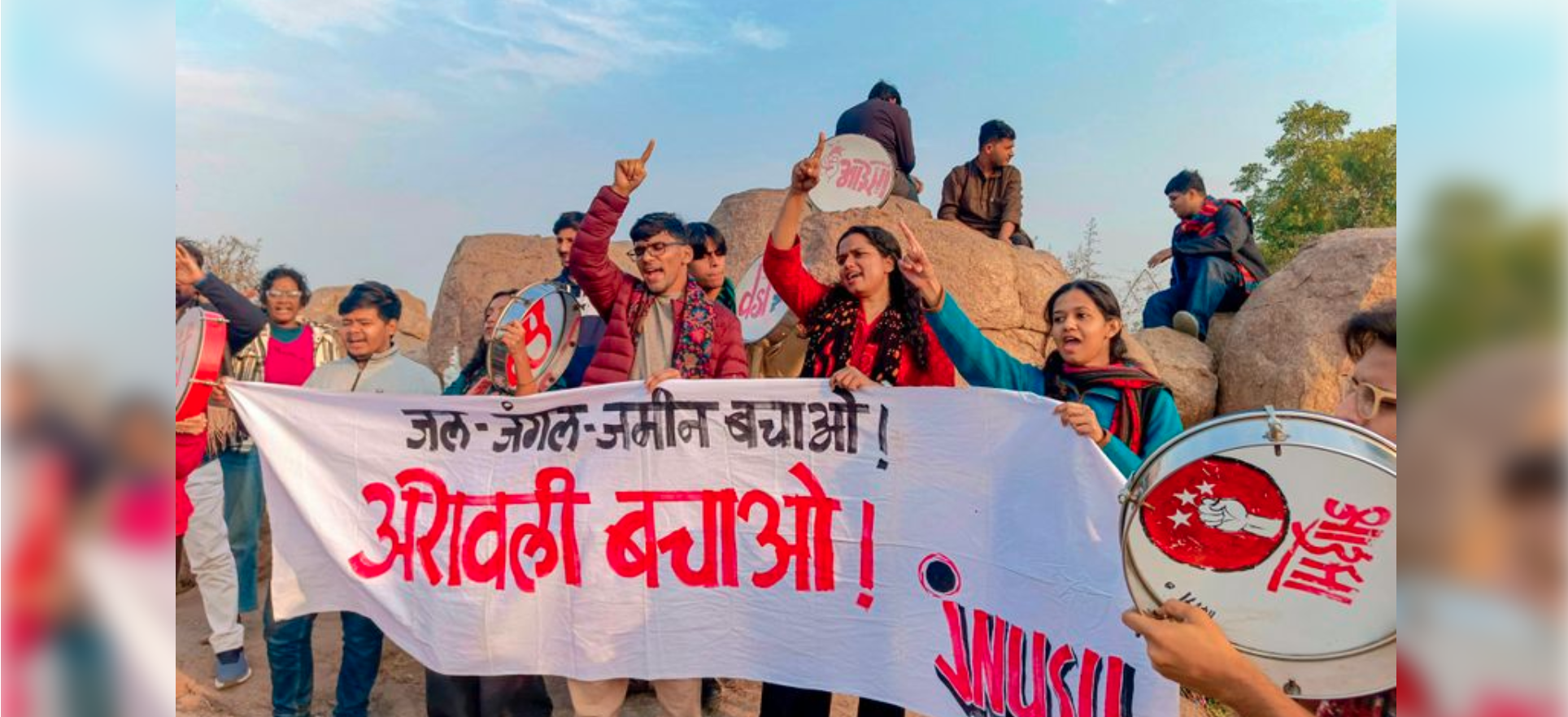
Stretching across 1,44 lakh sq km in 37 districts of four states — Gujarat, Rajasthan, Haryana and Delhi — the Aravallis have abundant reserves of major minerals like lead, zinc, silver, copper and of course, marble. In addition, the hills are also rich in critical minerals like lithium, nickel, molybdenum, niobium and tin. Just as the US President in Don’t Look Up was made to believe that the comet’s economic wealth would bring in immense fortune, it is being acknowledged that the minerals present in the Aravallis are essential for the economic development of the country. If that be so, I don’t know why massive #SaveAravalli protests are taking place. Don’t people understand the economic value of the mineral wealth that needs to be extracted at any cost?
Over a billion years old, the Aravallis have served as a green wall against desertification of the northwestern region. These hills are also a repository of rich biodiversity; they play a key role in recharging aquifers and have resisted the march of the desert into Delhi, Haryana and Uttar Pradesh. But a lot of damage has already been done to the wildlife habitats and local livelihoods by human intervention and the development process in the Aravalli belt. As the desert expands, the country’s hard-earned food security is under threat.
Parliament was informed in February 2025 that as per the 2021 Desertification and Land Degradation Atlas of India prepared by the Indian Space Research Organisation, deserts are fast creeping into the food bowl. Already, more than 3.64 lakh hectares in Haryana, 1.68 lakh hectares in Punjab and 1.54 lakh hectares in Uttar Pradesh are under land degradation and desertification. If the Aravallis are made to conform to the new definition, land degradation will only hasten. It will open the floodgates for gushing hot winds, frequent dust storms, soaring temperatures; coupled with the depletion of deep aquifers due to exhausting crop farming, this will lead to rapid soil erosion, thereby degrading farming lands.
While the debate on the proposed new benchmark for the Aravallis is focused on mining and the environment, the emerging threat to long-term food security is getting sidelined. The United Nations Convention to Combat Desertification has warned that desertification deals a severe blow to soil fertility, turning fertile lands semi-arid. Surely, desertification is too serious an issue to be confined to claims and pledges. Putting a new management plan into action and promises of ‘robust protection’ are no longer adequate safeguards.
The Aravallis are not just a natural reserve for strategic minerals; they also provide massive ecosystem services. The true economic cost of these ecological and environmental services has not been worked out. Once this cost is known, the nation will realise the economic necessity of keeping the hills intact, even as the economic cost of extracting minerals is overemphasised.
If national accounting as per the TEEB (The Economics of Ecosystem Services of Biodiversity) norms can ascribe an economic value to the religiously important Mount Kailash and the Dal Lake, a similar cost-benefit analysis must be done for one of the oldest hill ranges in the world.
BY : Devinder Sharma